


Your Neck Does More Than Hold Your Head Up
When headaches and neck pain occur together, it is easy to assume the problem is simply tight muscles or restricted movement.
But your neck also contains sensory receptors that continuously tell your brain where your head is and how it is moving.
That information contributes to balance, eye movement, posture and movement accuracy. If this system becomes less precise, symptoms may occur even when strength and range of motion appear relatively normal.
Why I’m Talking About Headaches and Neck Pain
David McCawley is a Senior Physiotherapist with more than a decade of experience assessing headache, dizziness and musculoskeletal presentations.
Rather than looking only at flexibility or strength, assessment may also consider how accurately the neck senses and controls movement.
That can be particularly relevant when headaches and neck pain occur alongside dizziness or difficulty with head movement.
What Is Neck Sensorimotor Control?
Sensorimotor control is your body’s ability to sense movement and position, then respond accurately.
Think of it as an ongoing conversation between your neck and brain.
Your neck sends information about head position, movement and joint position. Your brain then combines this with information from your eyes and inner ear.
A review of cervical proprioception explains that these systems work together to help coordinate the head, eyes, neck and body.
This is why the neck can play a role in much more than simply turning your head.
What Does Proprioception Have to Do With the Neck?
Proprioception is your ability to sense where part of your body is without looking at it.
For the neck, this means knowing where your head is positioned in relation to your body.
One commonly used test asks someone to turn their head and then return to a starting position with their eyes closed.
A systematic review of cervical joint position testing explains that this type of test is used to assess how accurately someone can reposition their head.
When headaches and neck pain are present, this type of control may sometimes be worth assessing alongside strength and mobility.
Neck Pain Can Affect Movement Accuracy
Neck pain does not only affect comfort.
Research suggests it can also affect how accurately people sense and control their neck position.
A systematic review and meta-analysis found that people with chronic neck pain performed worse than pain-free participants when asked to return their head to a neutral position.
More recent research has reached a similar conclusion. A 2024 systematic review found poorer joint-position sense, eye-movement control and postural stability in people with neck pain compared with healthy controls.
This does not mean altered sensorimotor control explains every case of headaches and neck pain.
It does show why simply stretching a sore neck may not always address the whole picture.
Why Can Dizziness Occur With Neck Symptoms?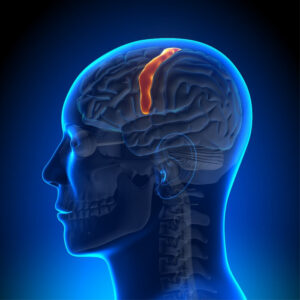
Your brain constantly combines information from your neck, eyes and inner ear.
When those signals do not match well, some people may experience dizziness, unsteadiness or difficulty orientating themselves.
A recent review of dizziness associated with neck pain describes how altered cervical proprioceptive information may contribute to a sensory mismatch between the visual, vestibular and neck systems.
Importantly, dizziness has many possible causes.
It should not automatically be blamed on the neck, particularly when symptoms are new or unexplained.
Why Normal Strength Does Not Tell Us Everything
Someone may have good neck strength and reasonable movement but still struggle with movement accuracy.
This is because strength and sensorimotor control measure different things.
You can be strong enough to turn your head but still have difficulty judging exactly where your head is positioned.
That distinction may be relevant when headaches and neck pain are associated with sustained posture, movement sensitivity or dizziness.
The original article highlights this as one reason assessment may need to look beyond stretching and strengthening alone.
Can Neck Control Be Retrained?
In some cases, rehabilitation can include exercises designed to improve movement accuracy and coordination.
These may involve slowly returning the head to a target position, controlled head movements or combining eye and head movements.
There is some emerging evidence in people with cervicogenic headache. A 2024 clinical trial found that adding a specific proprioceptive exercise to rehabilitation improved selected measures of balance and headache pain.
The study was small, so it should not be taken to mean proprioceptive training is the answer for every headache.
Instead, it supports the idea that neck position sense may be one useful area to assess in appropriately selected patients.
Accuracy Can Matter More Than Speed
Sensorimotor exercises are usually not about forcing large or fast neck movements.
The focus is often on control.
A simple task might involve turning your head slowly and trying to return accurately to the starting position.
As control improves, exercises may become more challenging by adding eye movements, balance tasks or movement while walking.
For headaches and neck pain, the goal is not to overwhelm the system.
It is to gradually challenge movement accuracy at an appropriate level.
Do Not Assume Every Headache Comes From the Neck
Neck symptoms are common in people with headache and migraine, but that does not mean the neck is always the primary cause.
Healthdirect notes that neck pain can occur with headaches, while migraine itself can also involve neck symptoms.
That is why assessment matters.
New, severe or changing headaches should be medically reviewed rather than automatically treated as a neck problem. Healthdirect recommends urgent medical care for sudden severe headache or headache accompanied by concerning neurological symptoms.
Look Beyond Tight Muscles
If headaches and neck pain continue despite reasonable strength and mobility, sensorimotor control may be another piece worth considering.
The issue may not simply be whether the neck is strong or flexible.
It may also involve how accurately the neck senses movement and communicates that information to the brain.
That is the central message of David’s original article: sometimes the missing link is not making the neck looser, but helping the neck and nervous system coordinate movement more accurately.
Take the Next Step
If headaches and neck pain are affecting daily life, particularly when dizziness or movement sensitivity is also present, an individual assessment can help determine whether neck movement, proprioception or other factors should be considered.
Book a session with one of our physiotherapists online or call 1800 432 322 to find more out.
Written by: